


In industrial engineering, high-pressure pipeline systems act as the primary circulatory tracks for power plants, oil and gas refineries, chemical processing units, and hydraulic systems. Within these environments, a single component failure can trigger catastrophic operational downtime, financial loss, or significant safety hazards. While pipes form the straight runs of these configurations, pipe fittings are tasked with changing flow directions, adapting sizes, and managing intense mechanical stresses. Selecting the correct high-pressure fitting demands a rigorous technical approach that balances metallurgy, fluid mechanics, physics, and international standards.
1. Deciphering System Demands: Pressure and Temperature Ratings
The foundation of fitting selection rests upon understanding the system’s maximum allowable working pressure (MAWP) and its shifting temperature limits. Pressure and temperature share an inverse relationship in piping metallurgy; as temperatures climb, a material's tensile and yield strength degrades.
Fittings are categorized by pressure classes, which specify the maximum pressures they can safely endure at benchmark temperatures. Common standards include ASME B16.11 for forged steel socket-welding and threaded fittings, which sets classifications at 2000, 3000, 6000, and 9000 lbs (often designated as Class 3000, 6000, etc.). To ensure compliance, engineers must calculate the minimum required wall thickness using formulas defined by codes such as ASME B31.3 (Process Piping):
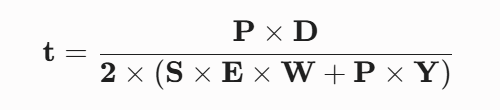
Where:
- t represents the pressure design thickness.
- P is the internal design gauge pressure.
- D is the outside diameter of the pipe/fitting.
- S is the allowable stress value for the material at design temperature.
- E is the quality factor.
- W is the weld joint strength reduction factor.
- Y is a valid coefficient based on material type and temperature range.
2. Material Selection and Metallurgical Compatibility
Choosing the correct material prevents premature failures rooted in corrosion, erosion, thermal expansion, or mechanical fatigue. Crucially, the fitting material must closely match or complement the pipeline material to prevent galvanic corrosion and ensure uniform thermal expansion rates.
| Material Category | Common Grades | Primary High-Pressure Applications |
| Carbon Steel | ASTM A105, A350 LF2 | Oil and gas transmission, high-temperature steam lines, non-corrosive hydrocarbons. |
| Stainless Steel | ASTM A182 F316/316L | Chemical processing, offshore environments, cryogenic applications, highly corrosive fluids. |
| Alloy Steel | ASTM A182 F11, F22, F91 | Power generation, superheated steam lines requiring high creep resistance. |
| Duplex / Super Duplex | UNS S31803, S32750 | Desalination plants, aggressive chemical handling, high-chloride marine environments. |
3. Connection Types: Finding the Right Seal Method
How a fitting attaches to a pipeline dictates its leak-tight integrity, structural strength, and long-term maintenance needs. High-pressure pipeline systems generally rely on three main connection designs:
Butt-Weld Connections (ASME B16.9)
Butt-welding is the preferred method for critical, heavy-duty, high-pressure, and high-temperature pipelines. The fitting and the pipe are aligned rim-to-rim and welded around the circumference. This forms a continuous, full-penetration joint that offers superior strength and smooth fluid dynamics, minimizing turbulence and erosion within the system.
Socket-Weld Connections (ASME B16.11)
In socket-weld systems, the pipe slides into a recessed area of the fitting before being sealed with a fillet weld. This connection type is highly effective for smaller pipeline diameters (typically under 2 inches nominal pipe size) where internal alignment isn't as easily managed. However, the internal crevice inherent to socket welds makes them vulnerable to localized crevice corrosion and stress concentration.
Threaded Connections
Threaded connections rely on mating tapered threads (such as NPT according to ASME B1.20.1) paired with specialized high-pressure thread sealants or anaerobic compounds. While convenient for quick assembly and low-risk environments, they are generally restricted to non-hazardous, smaller utilities under 2 inches, as the thread roots introduce high stress concentration points vulnerable to fatigue failure under cyclic pressure loads.
Engineering Notice: The Danger of Dissimilar Joining
Avoid joining high-pressure fittings made of mismatched metal classes (e.g., threading a stainless steel fitting into a carbon steel pipeline) without isolated insulation. Doing so risks triggering rapid galvanic corrosion, compromising structural wall thickness, and causing sudden blowout failures.
4. Flow Dynamics, Geometry, and Pressure Drop Control
High-pressure fluids moving at rapid velocities generate substantial kinetic forces. When selecting fitting geometries—such as elbows, tees, reducers, and crosses—engineers must factor in fluid turbulence and pressure drop restrictions. For instance, a short-radius (SR) 90-degree elbow causes sharp direction changes, resulting in high turbulence and elevated localized erosion rates. In contrast, long-radius (LR) elbows offer smoother flow paths, reducing friction losses and extending the operating life of the installation.
5. Compliance, Testing, and Quality Verification
Never install uncertified or unvouched components into a high-pressure system. Ensure your suppliers furnish comprehensive Mill Test Reports (MTRs) tracing back to the chemical and physical heat numbers of the raw steel. Fittings must align explicitly with international validation entities such as:
- ASME: American Society of Mechanical Engineers (B16.9, B16.11, B31.3)
- ASTM: American Society for Testing and Materials (Material specifications)
- ISO: International Organization for Standardization
- NACE: National Association of Corrosion Engineers (specifically MR0175/ISO 15156 for sour gas environments)
Conclusion
Selecting pipe fittings for high-pressure systems goes far beyond matching structural pipe sizes. It requires a meticulous evaluation of structural mechanics, metallurgy, environmental chemistry, and strict compliance parameters. By verifying the pressure-temperature relationships, selecting compatible material grades, picking robust joint connections, and honoring fluid dynamics, you can design a reliable pipeline infrastructure optimized for safe, high-performance operation.